
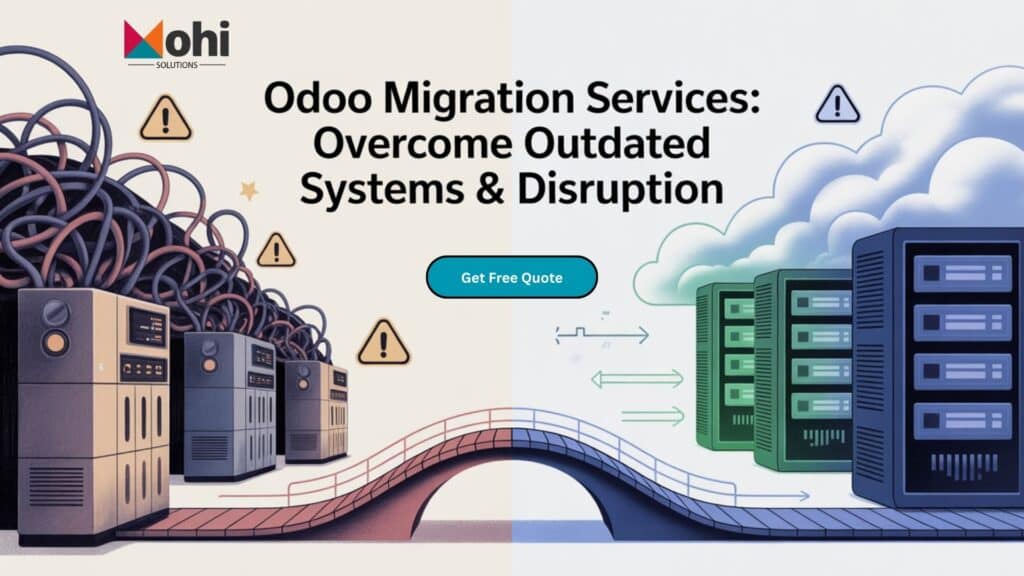
As businesses grow and evolve, they face a pressing need to upgrade their systems to keep up with changing demands. One of the most common systems businesses look to for upgrading is Odoo, a highly flexible and modular ERP platform that can help streamline operations, increase efficiency, and improve overall performance. However, migrating to Odoo from an older ERP system or another software can present some challenges. This is where Odoo migration services come in, helping businesses transition smoothly while addressing potential pitfalls. In this blog, we’ll explore the most common pain points businesses face during Odoo migration and how Odoo migration services can help businesses overcome them successfully.
Struggling with Outdated ERP Systems
Businesses often find themselves stuck with outdated ERP systems that are no longer able to meet their growing operational demands. Older systems typically have limitations in features, scalability, and security. As companies expand, they may experience:
- Limited functionality: Outdated systems often fail to offer modern features like automation, advanced reporting, and data analytics.
- Scalability issues: As the business grows, older ERP systems struggle to handle increasing transaction volumes, leading to inefficiencies.
- Security risks: With outdated ERP systems, security vulnerabilities may go unaddressed, putting the business at risk of data breaches or cyber threats.
Solution:
Migrating to Odoo ensures access to a modern, scalable ERP solution that can grow with your business. The latest version of Odoo offers improved security, new features, and the flexibility to add modules as needed, allowing your business to stay ahead of the curve.
The Fear of Data Loss During Migration

One of the most significant concerns during any ERP migration is the potential for data loss or corruption. Businesses rely on accurate data to run operations smoothly, and the idea of losing important records like financial data, customer details, and sales history can be alarming.
Solution:
Proper planning and execution are key to a successful migration. Experienced Odoo migration service providers ensure data integrity through careful mapping, testing, and validation processes. They create comprehensive backup strategies before initiating the migration to ensure that if anything goes wrong, the data can be easily restored without loss.
Business Disruptions During Migration
Any ERP migration can cause operational disruptions, especially if it involves a significant overhaul of existing systems. This can lead to:
- Downtime: Essential business processes may be halted temporarily during the transition.
- Employee frustration: Switching to a new system can confuse employees who are unfamiliar with the new platform.
- Customer dissatisfaction: A delay in order processing, customer support, or inventory management can harm customer satisfaction.
Solution:
The migration process must be carefully planned to minimize disruptions. Experienced migration teams often deploy strategies such as:
- Phased rollouts: Migrating in stages ensures that essential operations continue while the new system is being implemented.
- Off-hours migrations: Scheduling migrations during non-peak hours can minimize downtime.
- User training: Offering training to employees ensures they can quickly adapt to the new system, preventing frustrations and maintaining operational efficiency.
Difficulty in Adapting Customizations
Many businesses depend on customized workflows, modules, and reports within their existing ERP system. Migrating to a new ERP system like Odoo can create concerns about how these customizations will translate into the new system. Will they be lost? Will the custom modules still work properly?
Solution:
One of Odoo’s strengths is its flexibility and ability to be customized. A successful migration involves migrating not just the data, but also the customizations, ensuring that your specific business processes are retained. Experienced Odoo migration services help businesses preserve or upgrade custom modules and workflows to ensure that the transition doesn’t disrupt existing operations.
Compatibility with Third-Party Integrations
Businesses today often rely on third-party applications like CRM systems, marketing tools, payment gateways, and inventory management solutions. When migrating to a new ERP system, there’s always a concern about whether these integrations will continue to work smoothly.
Solution:
Properly handling third-party integrations is a critical part of the migration process. Expert migration teams assess your current integrations and ensure they are compatible with Odoo, or they may offer alternatives that integrate seamlessly with the new system. This ensures that businesses can continue to use their existing tools without disruption
Lack of In-House Expertise for Migration
Migrating to Odoo can be complex, particularly if you don’t have a dedicated in-house IT team with experience in ERP migrations. Without the right expertise, businesses risk making mistakes, facing delays, or encountering technical issues that could derail the entire process.
Solution:
Working with an experienced Odoo migration service provider can make all the difference. These experts handle every aspect of the migration, from data mapping and system configuration to testing and troubleshooting. They ensure that the process is efficient, cost-effective, and doesn’t cause undue strain on your internal resources.
Post-Migration Challenges
Even after the migration is complete, businesses may face challenges related to:
- Employee training: Employees may not be familiar with the new system, which could lead to decreased productivity.
- Ongoing support: Businesses need access to continuous support to address any post-migration issues, especially during the early stages of system adoption.
Solution:
Ongoing support and training are vital for ensuring the successful adoption of Odoo. After the migration is complete, businesses should provide comprehensive training to employees and offer continuous support to troubleshoot any issues that arise. This ensures that employees can use the new system efficiently and that any problems are resolved promptly.
Why Odoo Migration Services Are Essential
Migrating to Odoo can bring about significant benefits, including streamlined operations, better decision-making, and improved performance. However, to ensure that the migration process is as smooth as possible, it’s essential to partner with a professional migration service provider. These experts help businesses overcome the pain points associated with migration, including:
- Ensuring data integrity
- Minimizing disruptions to business operations
- Adapting custom features and third-party integrations
- Providing post-migration support and training
By addressing these pain points and taking the right steps to execute a thorough migration, businesses can unlock the full potential of Odoo and ensure a smooth transition to a more efficient and scalable ERP system.
Conclusion
Migrating to Odoo is an exciting step forward for businesses looking to streamline their operations, improve efficiency, and stay competitive. However, businesses often face challenges during the migration process, including data integrity, system disruptions, and the need for post-migration support.
By understanding these common pain points and working with experienced Odoo migration services, businesses can ensure a smooth and successful transition to Odoo. With the right planning, expertise, and support, Odoo can be the perfect ERP solution to support your business’s growth and long-term success.
At Mohi Solutions, we specialize in providing seamless Odoo migration services that ensure a smooth transition from your existing ERP system to Odoo. Our expert team handles every aspect of the migration process, from data mapping and system configuration to customization and third-party integrations.
FAQ
1. How long does the migration process take?
The duration of the migration process depends on several factors, such as the size of your business, the complexity of your current system, and the version of Odoo you’re migrating to. Generally, it can take from a few weeks to a few months.
2. Will my custom modules work after migration?
Odoo is highly customizable, and the migration process can preserve or reconfigure your custom modules. However, in some cases, you may need to make adjustments to ensure compatibility with the latest version of Odoo.
3. How do you ensure that no data is lost during migration?
A key part of the migration process involves creating backups of all your data and testing the migration process before going live. This ensures that no data is lost and everything is transferred accurately.
4. What if there’s an issue during migration?
Professional Odoo migration services include contingency plans and backup strategies to minimize the risk of issues. If an issue does arise, experts are on hand to resolve it quickly and efficiently.
5. Is training provided after migration?
Yes, proper training is essential for ensuring a smooth transition. Most Odoo migration services include employee training to help your team get up to speed with the new system.